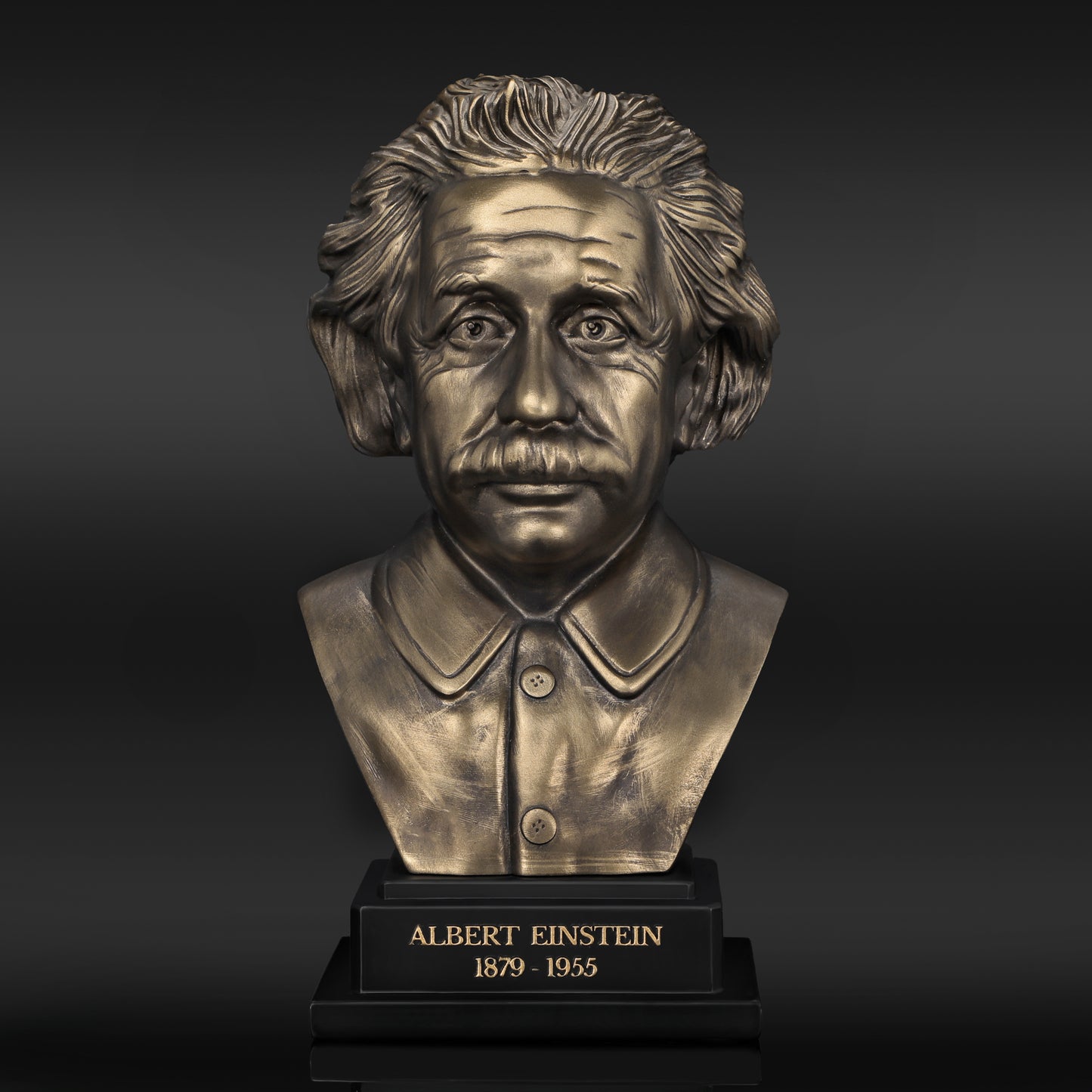
Albert Einstein Biography: Theory of Relativity, E=mc², and Nobel Laureate
 Albert Einstein: A Detailed Biography
Albert Einstein, one of the most renowned scientists in history, revolutionized physics with his theory of relativity and contributions to quantum mechanics. Known for his equation E=mc² and his 1921 Nobel Prize, Einstein’s life was marked by intellectual brilliance and global impact. This biography explores his early years, scientific achievements, personal life, and enduring legacy.
Early Life and Education
Albert Einstein’s Childhood in Germany
Albert Einstein was born on March 14, 1879, in Ulm, in the Kingdom of Württemberg, Germany, as documented by the Nobel Prize organization. His parents, Hermann and Pauline Einstein, ran a small electrical equipment business. Young Albert showed early curiosity, teaching himself geometry and algebra by age 12, as noted in the Encyclopaedia Britannica. Despite myths of poor academic performance, he excelled in mathematics and physics but struggled with rigid schooling.
Education and Early Career
Einstein’s family moved to Munich, then Italy, before he enrolled at the Swiss Federal Polytechnic in Zurich in 1896. He graduated in 1900 with a teaching diploma in physics and mathematics. Unable to secure an academic position, he worked as a clerk at the Swiss Patent Office in Bern, where he analyzed patents, honing his analytical skills. This period laid the groundwork for his groundbreaking work, as detailed by the American Institute of Physics.
Scientific Breakthroughs
The Annus Mirabilis Papers
In 1905, Einstein published four papers in the Annalen der Physik, known as his “Annus Mirabilis” (Miracle Year) papers, which transformed physics. These included his explanation of the photoelectric effect, Brownian motion, special relativity, and the mass-energy equivalence (E=mc²). The photoelectric effect paper, which earned him the 1921 Nobel Prize, described how light interacts with matter, laying the foundation for quantum mechanics, as recognized by the Nobel Prize committee.
Theory of Relativity
Einstein’s theory of special relativity, published in 1905, introduced the idea that the laws of physics are the same for all non-accelerating observers, with the speed of light as a constant. His famous equation, E=mc², showed that mass and energy are interchangeable. In 1915, he expanded this into the theory of general relativity, describing gravity as the curvature of spacetime, as explained by the NASA. The 1919 solar eclipse observations confirmed general relativity, catapulting Einstein to global fame.
Life in Exile and Move to the United States
In 1933, Einstein fled Nazi Germany due to his Jewish heritage and anti-Nazi views, as noted by the United States Holocaust Memorial Museum. He accepted a position at the Institute for Advanced Study in Princeton, New Jersey, where he remained until his death. Einstein became a U.S. citizen in 1940 while retaining Swiss citizenship. His move marked a shift toward public advocacy, including warnings about nuclear weapons.
Role in the Atomic Age
Einstein and the Manhattan Project
In 1939, Einstein co-signed a letter to President Franklin D. Roosevelt, warning of Nazi Germany’s potential to develop atomic bombs, as documented by the American Museum of Natural History. This letter spurred the Manhattan Project, though Einstein did not directly participate. Later, he expressed regret over the bomb’s use, becoming a vocal advocate for nuclear disarmament and peace.
Personal Life and Public Persona
Einstein married Mileva Marić in 1903, with whom he had three children, though they divorced in 1919. He later married his cousin Elsa Löwenthal. Known for his disheveled appearance and wit, Einstein became a cultural icon, as described by the Smithsonian Magazine. He was also a humanitarian, supporting civil rights and opposing fascism.
Death and Legacy
Albert Einstein’s Enduring Impact
Einstein died on April 18, 1955, in Princeton, New Jersey, from a ruptured abdominal aortic aneurysm, as recorded by the Princeton University. His theories continue to shape modern physics, influencing technologies like GPS and nuclear energy. Einstein’s name is synonymous with genius, and his humanitarian efforts left a lasting mark on global discourse.
Frequently Asked Questions About Albert Einstein
Below are answers to some of the most commonly asked questions about Albert Einstein, addressing popular curiosities and search queries.
What Is Albert Einstein Famous For?
Albert Einstein is famous for developing the theory of relativity, including the equation E=mc², which revolutionized modern physics.
What Is E=mc²?
E=mc² is Einstein’s equation from his theory of special relativity, showing that energy (E) equals mass (m) times the speed of light (c) squared, demonstrating the equivalence of mass and energy, as explained by PBS NOVA.
Did Albert Einstein Win a Nobel Prize?
Yes, Einstein won the Nobel Prize in Physics in 1921 for his explanation of the photoelectric effect, not for his theory of relativity, as noted by the Nobel Prize committee.
Where Was Albert Einstein Born?
Albert Einstein was born in Ulm, in the Kingdom of Württemberg, Germany, on March 14, 1879.
Why Did Albert Einstein Move to the United States?
Einstein moved to the U.S. in 1933 to escape Nazi persecution in Germany due to his Jewish heritage and anti-Nazi stance, as noted by the United States Holocaust Memorial Museum.
What Was Albert Einstein’s IQ?
Einstein’s IQ is estimated to have been between 160 and 180, though he was never formally tested, according to historical analyses.
How Did Albert Einstein Die?
Einstein died on April 18, 1955, in Princeton, New Jersey, from a ruptured abdominal aortic aneurysm, as recorded by Princeton University.