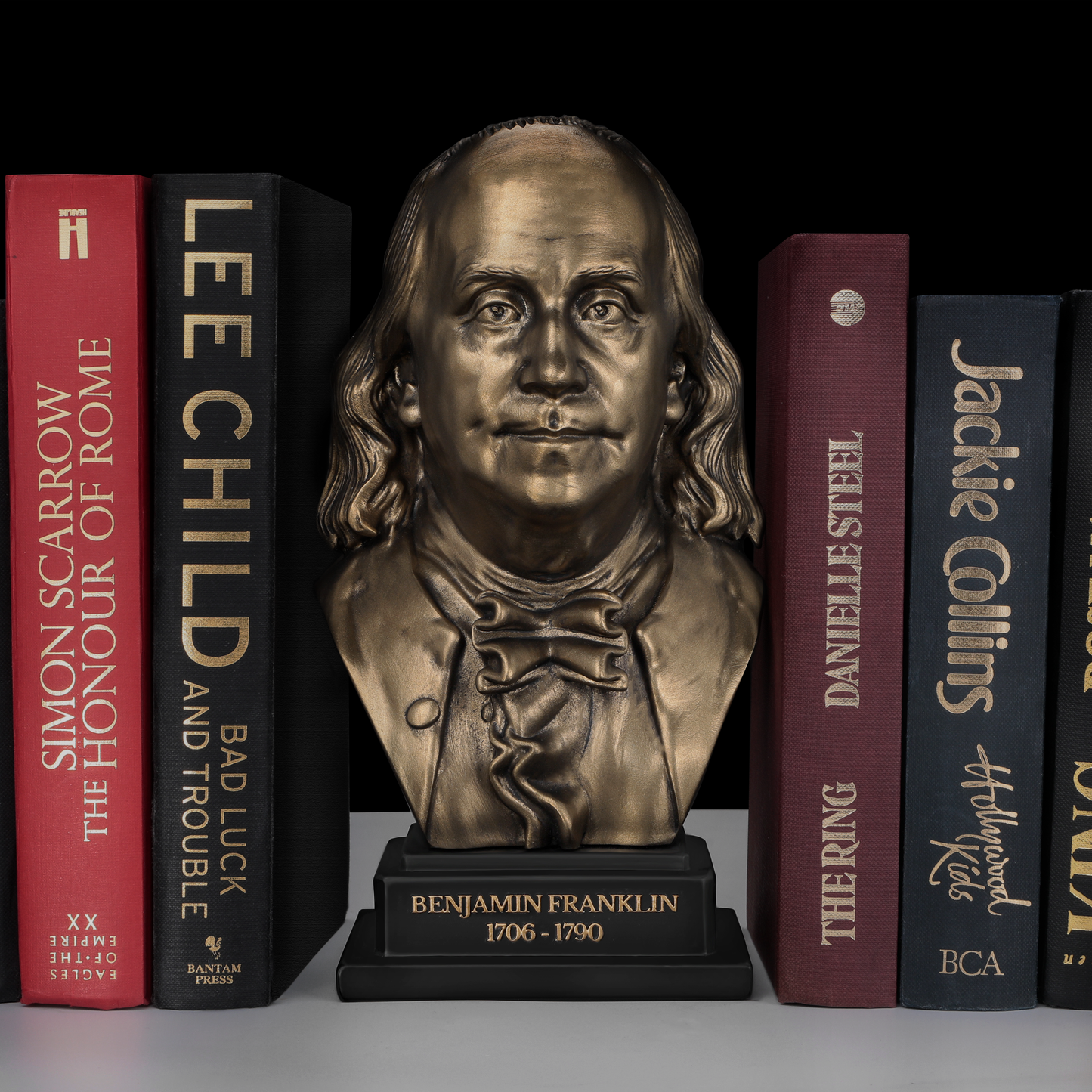
Benjamin Franklin Biography: Founding Father, Inventor, and American Polymath

Benjamin Franklin: A Detailed Biography
Benjamin Franklin, a polymath and Founding Father of the United States, was a printer, scientist, inventor, diplomat, and statesman whose contributions shaped early America. Known for his inventions like the lightning rod and his role in the American Revolution, Franklin’s legacy endures. This biography explores his early life, career, inventions, political contributions, and lasting impact.
Early Life and Education
Childhood in Boston
Benjamin Franklin was born on January 17, 1706, in Boston, Massachusetts, to Josiah Franklin and Abiah Folger, as documented by the National Park Service. The 15th of 17 children, Franklin received limited formal education, attending school only until age 10. He apprenticed with his brother James, a printer, at 12, sparking his lifelong passion for publishing and writing.
Early Career as a Printer
At 15, Franklin began contributing to his brother’s newspaper, the New-England Courant, under the pseudonym Silence Dogood. Fleeing an unhappy apprenticeship, he moved to Philadelphia in 1723, where he worked as a printer and founded the Pennsylvania Gazette, as noted by the Library of Congress. In 1732, he launched Poor Richard’s Almanack, a popular publication filled with aphorisms, weather forecasts, and practical advice.
Inventions and Scientific Contributions
Franklin’s Inventions
Franklin’s curiosity led to numerous inventions, including the lightning rod, bifocals, the Franklin stove, a flexible urinary catheter, and the glass armonica. His most famous experiment, proving lightning is electricity by flying a kite in a storm, led to the lightning rod’s development, as detailed by the Franklin Institute. These innovations improved safety, health, and quality of life.
Scientific Recognition
Franklin’s electrical experiments earned him international acclaim, including membership in the Royal Society of London. His book, Experiments and Observations on Electricity, became a cornerstone of 18th-century science, as recognized by the American Philosophical Society, which he founded.
Political Career and the American Revolution
Early Political Involvement
Franklin’s civic contributions began in Philadelphia, where he established the first public lending library and a volunteer fire department. He served as Pennsylvania’s deputy postmaster general and later as postmaster general for the colonies, improving communication networks, as noted by the U.S. Postal Service.
Role in the American Revolution
During the American Revolution, Franklin was a key figure. He helped draft the Declaration of Independence in 1776 and was one of its signers, as documented by the National Archives. As a diplomat in France, he secured critical French military and financial support, pivotal to the American victory. Franklin also contributed to the U.S. Constitution in 1787.
Personal Life and Public Persona
Franklin married Deborah Read in 1730, and they had two children, though only their daughter Sarah survived to adulthood. Known for his wit and frugality, Franklin’s aphorisms like “A penny saved is a penny earned” became cultural staples, as highlighted by the Smithsonian Magazine. He was also an advocate for education and civic improvement.
Death and Legacy
Benjamin Franklin’s Enduring Impact
Franklin died on April 17, 1790, in Philadelphia from a respiratory infection, as recorded by the Massachusetts Historical Society. His contributions to science, politics, and society remain influential. Institutions like the University of Pennsylvania and the Franklin Institute honor his legacy, and his image on the $100 bill reflects his enduring prominence.
Frequently Asked Questions About Benjamin Franklin
Below are answers to some of the most commonly asked questions about Benjamin Franklin, addressing popular curiosities and search queries.
What Is Benjamin Franklin Famous For?
Benjamin Franklin is famous for his role as a Founding Father, inventing the lightning rod, bifocals, and Franklin stove, and his contributions to the Declaration of Independence.
What Did Benjamin Franklin Invent?
Franklin invented the lightning rod, bifocals, the Franklin stove, a flexible urinary catheter, and a glass armonica, among other innovations, as noted by the Franklin Institute.
What Was Benjamin Franklin’s Role in the American Revolution?
Franklin was a key diplomat, securing French support, and helped draft the Declaration of Independence and the U.S. Constitution, as per the National Archives.
Where Was Benjamin Franklin Born?
Benjamin Franklin was born in Boston, Massachusetts, on January 17, 1706.
Did Benjamin Franklin Sign the Declaration of Independence?
Yes, Franklin was a signer of the Declaration of Independence in 1776 and contributed to its drafting.
What Was Poor Richard’s Almanack?
Poor Richard’s Almanack was an annual publication by Franklin, offering weather forecasts, practical advice, and witty aphorisms from 1732 to 1758, as noted by the Library of Congress.
How Did Benjamin Franklin Die?
Franklin died on April 17, 1790, in Philadelphia, Pennsylvania, from a respiratory infection, as recorded by the Massachusetts Historical Society.