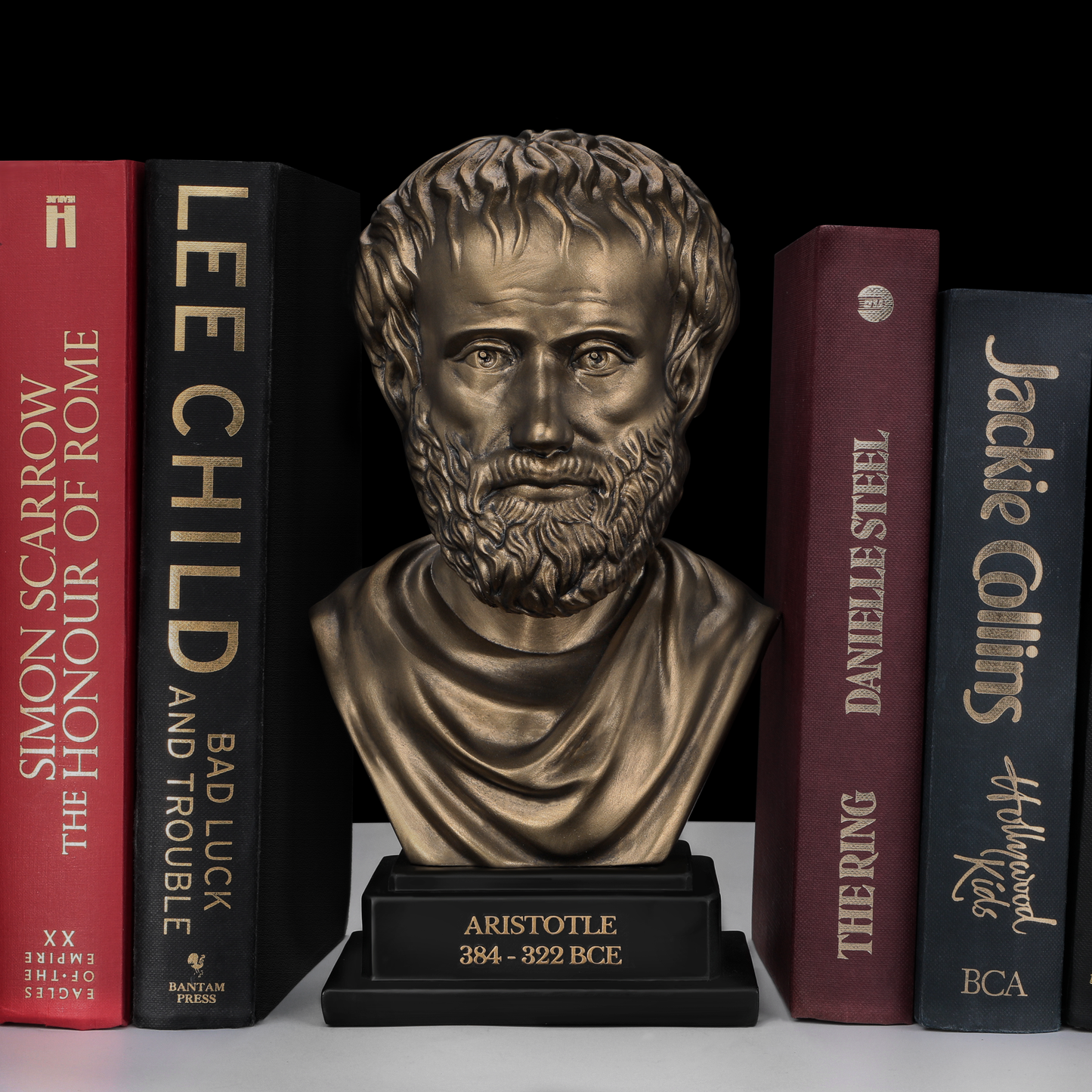
Aristotle Biography: Nicomachean Ethics, Politics, and Father of Western Philosophy

Aristotle: A Detailed Biography
Aristotle, one of the greatest philosophers in Western history, profoundly influenced fields like philosophy, science, and logic. His works, including Nicomachean Ethics and Politics, shaped intellectual thought for centuries. This biography explores his early life, philosophical contributions, teaching career, and enduring legacy.
Early Life and Education
Childhood in Stagira
Aristotle was born in 384 BCE in Stagira, Chalcidice, Greece, to Nicomachus, a physician, and Phaestis, as documented by the Encyclopaedia Britannica. Orphaned young, he was raised by a guardian. His father’s medical background sparked his interest in biology, as noted by the Stanford Encyclopedia of Philosophy.
Studies at Plato’s Academy
At 17, Aristotle joined Plato’s Academy in Athens, studying under the renowned philosopher for nearly 20 years. He absorbed Platonic ideas but later developed his own empirical approach, emphasizing observation over abstract ideals, as recorded by the Internet Encyclopedia of Philosophy.
Philosophical Contributions
Logic and Scientific Method
Aristotle founded formal logic with his work Organon, introducing the syllogism, a method of deductive reasoning. His emphasis on empirical observation laid the groundwork for the scientific method, influencing biology and physics, as noted by the Library of Congress.
Ethics, Politics, and Metaphysics
In Nicomachean Ethics, Aristotle proposed the “Golden Mean,” advocating balance in moral behavior. His Politics explored governance, favoring a mixed constitution. In Metaphysics, he examined the nature of being and causality, introducing the “four causes” (material, formal, efficient, final), as highlighted by the World History Encyclopedia.
Teaching and Influence
Tutoring Alexander the Great
In 343 BCE, Aristotle was invited by King Philip II of Macedon to tutor his son, Alexander the Great. For several years, he taught philosophy, literature, and science, shaping the young conqueror’s worldview, as documented by the National Geographic.
The Lyceum
Returning to Athens in 335 BCE, Aristotle founded the Lyceum, a school where he lectured and conducted research. His students, called Peripatetics, studied diverse subjects, and his lecture notes became the basis for many surviving works, as noted by the British Museum.
Personal Life and Challenges
Aristotle married Pythias, with whom he had a daughter, and later lived with Herpyllis, who bore him a son, Nicomachus. After Athens turned against Macedonian influence following Alexander’s death, Aristotle fled to avoid persecution, as recorded by the Internet Encyclopedia of Philosophy.
Death and Legacy
Aristotle’s Enduring Impact
Aristotle died in 322 BCE in Euboea, Greece, likely from a stomach ailment, as noted by the Encyclopaedia Britannica. His philosophy influenced medieval scholasticism, Islamic and Christian theology, and modern science. Aristotle’s ideas on ethics, politics, and logic remain foundational to Western thought, studied in universities worldwide.
Frequently Asked Questions About Aristotle
Below are answers to some of the most commonly asked questions about Aristotle, addressing popular curiosities and search queries.
Why Is Aristotle Famous?
Aristotle is famous for his contributions to philosophy, science, and logic, including works like Nicomachean Ethics, Politics, and the foundation of Western scientific thought.
What Are Aristotle’s Most Famous Works?
Aristotle’s most famous works include Nicomachean Ethics, Politics, Metaphysics, Physics, and Poetics, as noted by the World History Encyclopedia.
Where Was Aristotle Born?
Aristotle was born in Stagira, Chalcidice, Greece, in 384 BCE.
What Was Aristotle’s Philosophy?
Aristotle’s philosophy emphasized logic, ethics, metaphysics, and natural science, focusing on empirical observation and the concept of the “Golden Mean” in ethics, as per the Stanford Encyclopedia of Philosophy.
Did Aristotle Teach Alexander the Great?
Yes, Aristotle tutored Alexander the Great from around 343 BCE, teaching him philosophy, literature, and science, as noted by the National Geographic.
What Is Aristotle’s Theory of the Four Causes?
Aristotle’s four causes explain why things exist: material (what it’s made of), formal (its form), efficient (its maker), and final (its purpose).
How Did Aristotle Die?
Aristotle died in 322 BCE in Euboea, Greece, likely from natural causes, possibly a stomach ailment.