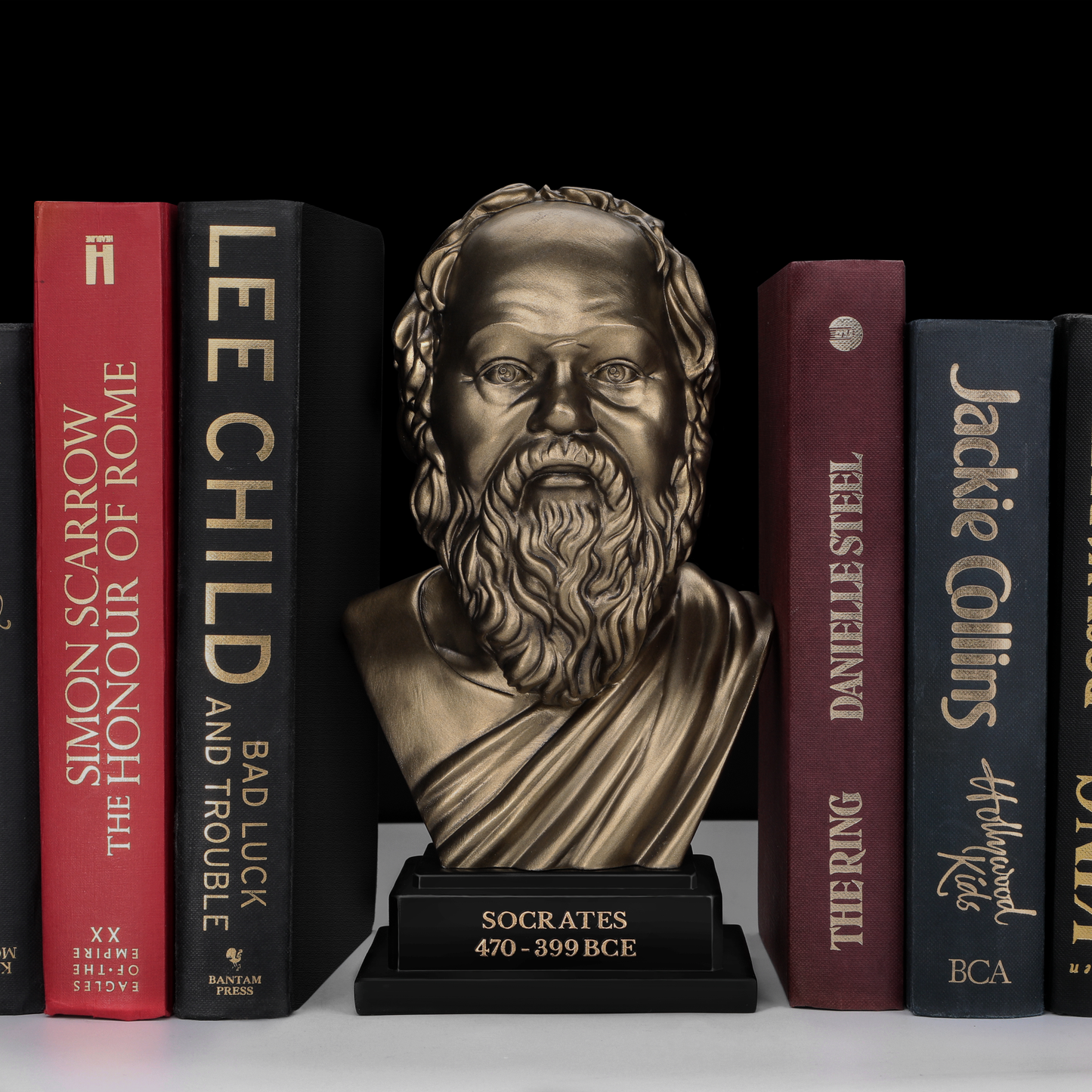
Socrates Biography: Life, Philosophy, and Legacy

Socrates: A Detailed Biography
Socrates, one of the founders of Western philosophy, revolutionized thought with his Socratic method and focus on ethics and self-knowledge. Though he left no written works, his ideas, preserved by students like Plato, shaped philosophy for centuries. This biography explores his early life, philosophical contributions, trial, and enduring legacy.
Early Life and Background
Childhood in Athens
Socrates was born around 470 BCE in Athens, Greece, to Sophroniscus, a stonemason, and Phaenarete, a midwife, as documented by the Encyclopaedia Britannica. Raised during Athens’ Golden Age, he likely received a basic education in reading, writing, and music, as noted by the Stanford Encyclopedia of Philosophy.
Early Career and Military Service
Socrates initially followed his father’s trade as a stonemason but became known for his philosophical inquiries. He served as a hoplite in the Peloponnesian War, displaying courage in battles like Potidaea and Delium, as recorded by the Internet Encyclopedia of Philosophy. His physical endurance and commitment to duty were widely admired.
Philosophical Contributions
The Socratic Method
Socrates developed the Socratic method, a dialogue of questioning to uncover truth and challenge assumptions. By asking probing questions, he exposed contradictions in beliefs, fostering critical thinking, as noted by the Library of Congress. This method remains a cornerstone of education and philosophy.
Ethics and Self-Knowledge
Socrates focused on ethical questions, such as “What is justice?” and emphasized self-knowledge, famously stating, “I know that I know nothing.” His philosophy prioritized virtue and moral character over material wealth, influencing works like Plato’s Apology, as highlighted by the World History Encyclopedia.
Teaching and Influence
Mentoring Plato and Others
Socrates taught no formal classes but engaged young Athenians, including Plato, in public discussions. His mentorship of Plato, who later founded the Academy, was pivotal in preserving his ideas, as noted by the National Geographic. Other students, like Xenophon, also recorded his teachings.
Impact on Athenian Society
Socrates’ questioning of traditional values and authority made him both admired and controversial. He challenged politicians, poets, and craftsmen, earning followers but also enemies among Athens’ elite, as documented by the British Museum.
Trial and Death
The Trial of Socrates
In 399 BCE, Socrates was tried for corrupting the youth and impiety, accused of rejecting Athens’ gods and introducing new deities. His defense, recorded in Plato’s Apology, was uncompromising, prioritizing truth over conformity. He was sentenced to death by drinking poison hemlock, as noted by the Smithsonian Magazine.
Execution and Martyrdom
Socrates faced his death calmly, discussing philosophy with friends until the end. His execution, described in Plato’s Phaedo, solidified his legacy as a martyr for free thought, as per the Internet Encyclopedia of Philosophy.
Personal Life and Legacy
Socrates married Xanthippe, with whom he had three sons. Known for his simple lifestyle and disregard for wealth, he often debated in Athens’ public spaces. His legacy, preserved through Plato and Xenophon, influenced Western philosophy, ethics, and education, as noted by the World History Encyclopedia.
Death and Legacy
Socrates’ Enduring Impact
Socrates died in 399 BCE in Athens by drinking poison hemlock, as mandated by his death sentence. His Socratic method and focus on ethics shaped philosophy, influencing thinkers like Plato, Aristotle, and modern education. His commitment to truth remains a symbol of intellectual integrity, as per the Encyclopaedia Britannica.
Frequently Asked Questions About Socrates
Below are answers to some of the most commonly asked questions about Socrates, addressing popular curiosities and search queries.
Why Is Socrates Famous?
Socrates is famous for developing the Socratic method, influencing Western philosophy, and mentoring Plato, whose works preserved his ideas.
What Is the Socratic Method?
The Socratic method is a form of questioning to stimulate critical thinking and expose contradictions in ideas, used in teaching and debate, as noted by the Library of Congress.
Where Was Socrates Born?
Socrates was born in Athens, Greece, around 470 BCE.
What Was Socrates’ Philosophy?
Socrates’ philosophy focused on ethics, self-knowledge, and questioning beliefs, emphasizing that “I know that I know nothing,” as per the Stanford Encyclopedia of Philosophy.
Did Socrates Write Any Books?
No, Socrates did not write any books; his teachings were recorded by his student Plato and others like Xenophon.
Why Was Socrates Sentenced to Death?
Socrates was sentenced to death in 399 BCE for corrupting the youth of Athens and impiety, as he challenged traditional beliefs, as noted by the Smithsonian Magazine.
How Did Socrates Die?
Socrates died in 399 BCE in Athens, Greece, by drinking poison hemlock, as mandated by his death sentence.