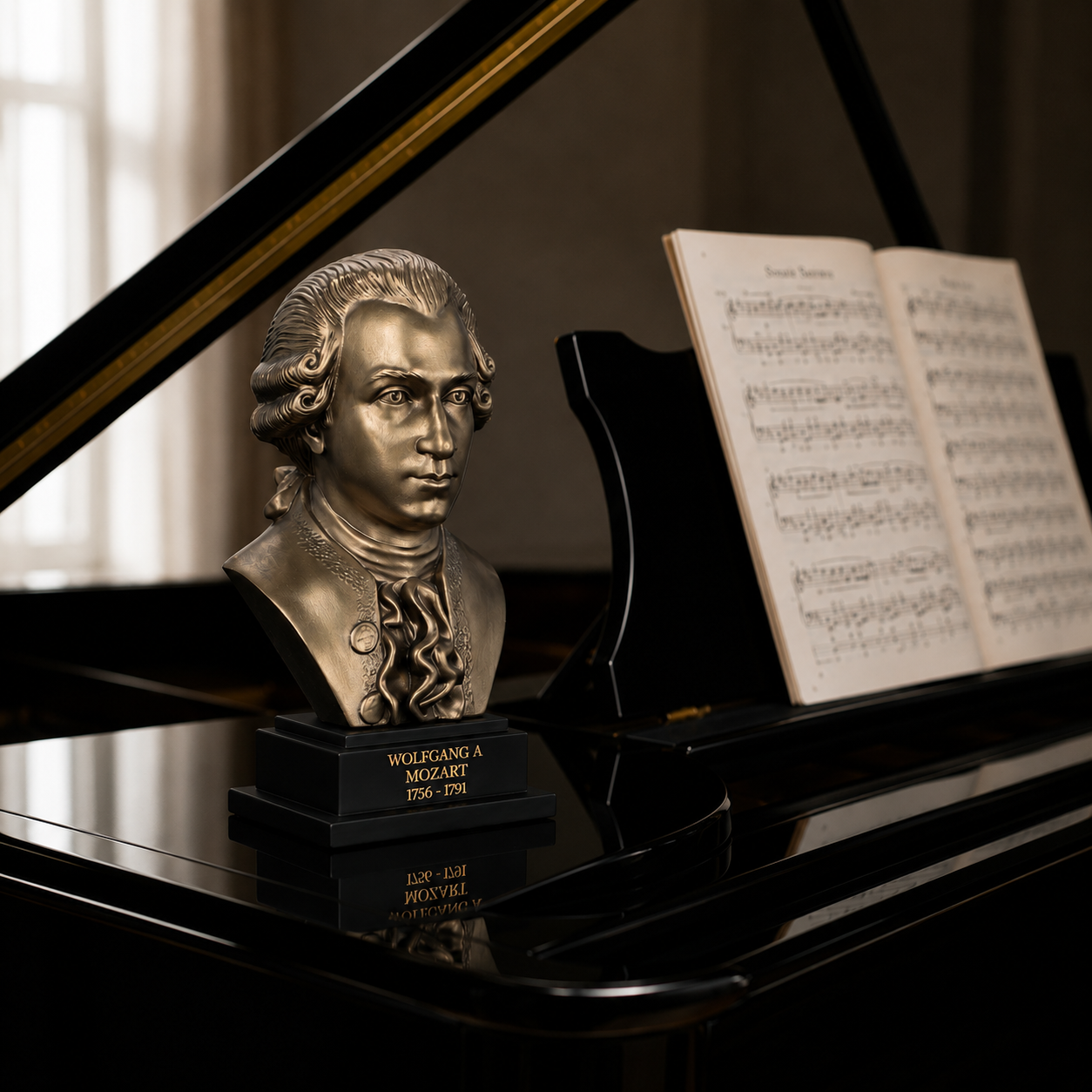
Wolfgang Amadeus Mozart Biography: The Magic Flute, Requiem, and Child Prodigy Composer

Wolfgang Amadeus Mozart: A Detailed Biography
Wolfgang Amadeus Mozart, one of the greatest composers in Western music, created timeless works like The Marriage of Figaro, The Magic Flute, and Requiem. A child prodigy, his prolific output and innovative compositions defined the Classical era. This biography explores his early life, musical career, personal challenges, and enduring legacy.
Early Life and Prodigy Years
Childhood in Salzburg
Wolfgang Amadeus Mozart was born on January 27, 1756, in Salzburg, Austria, to Leopold and Anna Maria Mozart, as documented by the Mozart Foundation Mozarteum. A musical prodigy, he began composing at age five and performed for European royalty by age six, guided by his father, a respected music teacher, as noted by the Encyclopaedia Britannica.
European Tours and Early Compositions
Leopold took Mozart and his sister Nannerl on tours across Europe, performing in cities like Munich, Paris, and London. By his teens, Mozart composed symphonies, operas, and chamber music, showcasing extraordinary talent, as recorded by the British Library. These tours established his reputation but were physically taxing.
Musical Career and Masterworks
Early Operas and Salzburg Years
In his teens, Mozart worked as a court musician in Salzburg, composing works like the opera Mitridate, re di Ponto. Frustrated by limited opportunities, he left Salzburg in 1777 to seek better prospects, as noted by the Classical Music. His early operas and symphonies laid the groundwork for his later masterpieces.
Vienna and Major Works
In 1781, Mozart settled in Vienna, where he produced his greatest works, including operas like The Marriage of Figaro (1786), Don Giovanni (1787), and The Magic Flute (1791). His symphonies, like No. 40, and piano concertos, like No. 21, showcased his melodic genius and structural innovation, as highlighted by the PBS Great Performances. His unfinished Requiem remains iconic.
Personal Struggles and Financial Difficulties
Despite his fame, Mozart faced financial instability due to lavish spending and irregular patronage. He often relied on loans and teaching to support his family, as documented by the NPR. His health deteriorated in his later years, exacerbated by overwork and stress.
Personal Life and Family
Mozart married Constanze Weber in 1782, and they had six children, though only two survived to adulthood. Their marriage was affectionate but strained by financial woes. Mozart’s letters, preserved by the Library of Congress, reveal his wit, devotion to music, and close family ties despite challenges.
Death and Legacy
Mozart’s Enduring Impact
Mozart died on December 5, 1791, in Vienna, likely from a fever, possibly rheumatic fever or a streptococcal infection, as recorded by the Smithsonian Magazine. His music, blending emotional depth with technical precision, influenced composers like Beethoven and remains a cornerstone of classical music. Mozart’s works are performed worldwide, and his life inspires countless adaptations.
Frequently Asked Questions About Wolfgang Amadeus Mozart
Below are answers to some of the most commonly asked questions about Wolfgang Amadeus Mozart, addressing popular curiosities and search queries.
Why Is Mozart Famous?
Wolfgang Amadeus Mozart is famous for his compositions like The Marriage of Figaro, The Magic Flute, and Symphony No. 40, showcasing his genius as a child prodigy and classical composer.
What Are Mozart’s Most Famous Works?
Mozart’s most famous works include The Marriage of Figaro, The Magic Flute, Symphony No. 40, Requiem, and Piano Concerto No. 21, as noted by the PBS Great Performances.
Where Was Mozart Born?
Wolfgang Amadeus Mozart was born in Salzburg, Austria, on January 27, 1756.
Was Mozart a Child Prodigy?
Yes, Mozart was a child prodigy, composing music by age five and performing for European royalty as a young child, as per the British Library.
What Instruments Did Mozart Play?
Mozart was a virtuoso pianist and violinist, and he also played the viola, organ, and harpsichord.
Did Mozart Have Children?
Yes, Mozart and his wife Constanze had six children, though only two survived to adulthood.
How Did Mozart Die?
Mozart died on December 5, 1791, in Vienna, Austria, likely from a fever, possibly rheumatic fever or a streptococcal infection, as per the Smithsonian Magazine.