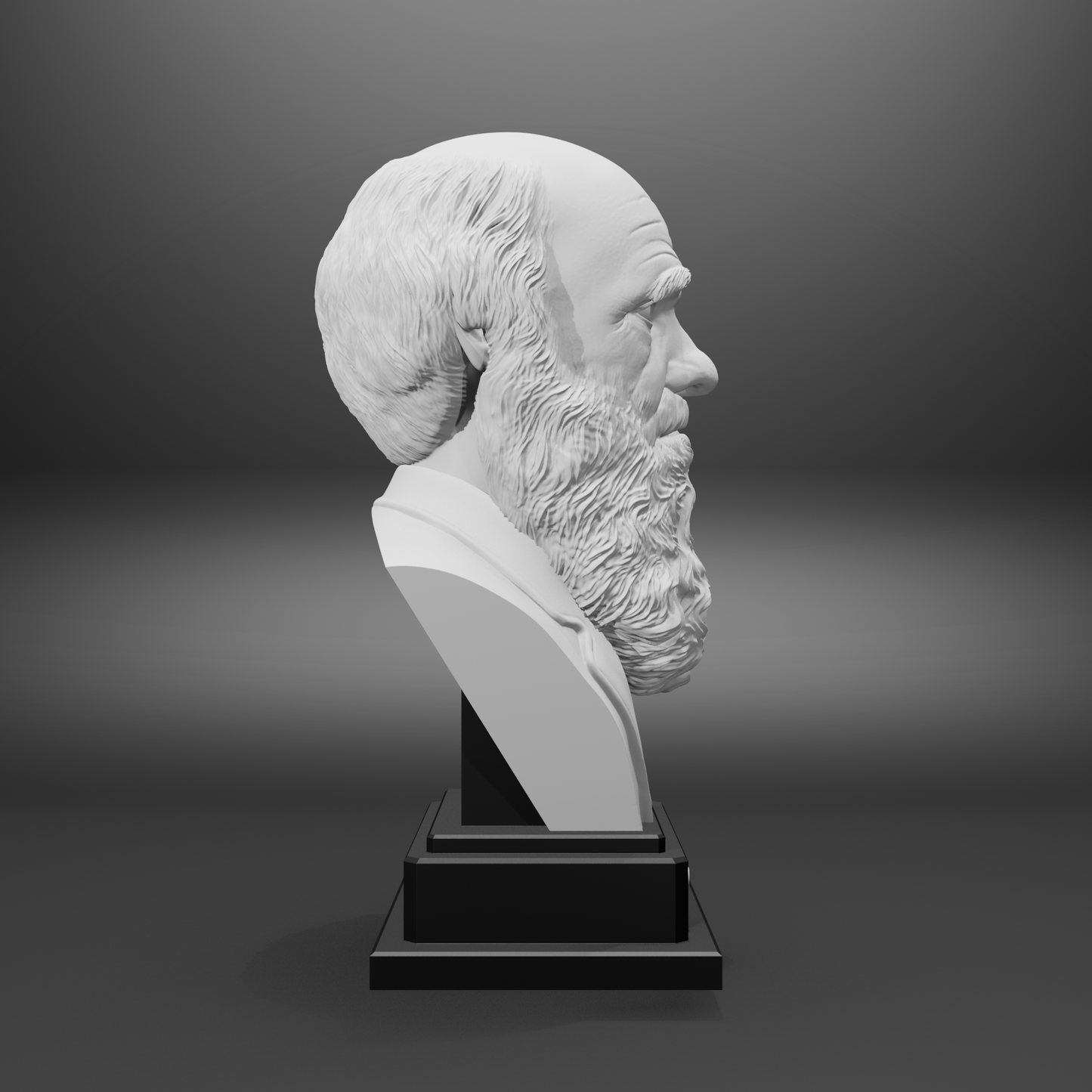
Charles Darwin Biography: On the Origin of Species and Theory of Evolution

Charles Darwin: A Detailed Biography
Charles Robert Darwin (1809–1882) was the English naturalist who gave the world the theory of evolution by natural selection. His 1859 book On the Origin of Species changed biology forever and remains one of the most influential scientific works ever written. Shy, methodical, and plagued by illness, Darwin spent decades gathering evidence before publishing. This biography covers his privileged childhood, voyage of the Beagle, development of evolutionary theory, major publications, and enduring legacy, as documented by the Encyclopaedia Britannica, the Darwin Correspondence Project, and the Natural History Museum.
Early Life and Education
Shrewsbury and Medical School
Born on February 12, 1809, in Shrewsbury, Darwin was the fifth of six children of wealthy doctor Robert Darwin and Susannah Wedgwood. His grandfathers were Erasmus Darwin (physician and poet) and Josiah Wedgwood (pottery magnate). He studied medicine at Edinburgh but disliked it, then theology at Cambridge, graduating in 1831, as detailed by the Darwin Project.
The Voyage of the Beagle (1831–1836)
Around the World
At age 22, Darwin was recommended as naturalist and gentleman companion to Captain Robert FitzRoy on HMS Beagle’s five-year surveying voyage. He collected specimens in Brazil, the Galápagos, Tahiti, New Zealand, and Australia. Galápagos finches, giant tortoises, and fossil megafauna convinced him species were not fixed, as chronicled in his Voyage of the Beagle.
Return and Development of Theory
Transmutation Notebooks
Back in England in 1836, Darwin married his cousin Emma Wedgwood in 1839 and settled at Down House, Kent. Reading Malthus’ essay on population in 1838 gave him the idea of natural selection. He wrote a 35-page sketch in 1842 and a 230-page essay in 1844, but delayed full publication for fear of controversy.
On the Origin of Species (1859)
“One long argument”
In 1858 Alfred Russel Wallace sent Darwin a paper describing the same idea. Their theories were jointly presented to the Linnean Society. Darwin rushed to complete his “abstract” — the 490-page On the Origin of Species by Means of Natural Selection, published November 24, 1859. It sold out immediately, as recorded by the British Library.
Later Works
The Descent of Man (1871)
Applied evolution to humans, arguing common descent with apes and sexual selection (e.g., peacock tails). The Expression of the Emotions in Man and Animals (1872) pioneered evolutionary psychology.
Personal Life
Darwin and Emma had ten children; three died in childhood. He suffered chronic illness (possibly Chagas disease from South America or anxiety). A devoted family man, he was devastated by the death of daughter Annie in 1851.
Death and Legacy
Charles Darwin’s Enduring Impact
Darwin died of heart disease on April 19, 1882, at Down House, aged 73. Despite his wish for a quiet burial, he was given a state funeral and buried in Westminster Abbey near Newton, as documented by the Westminster Abbey. His theory of evolution by natural selection is the unifying principle of modern biology; DNA evidence later confirmed his predictions. “Darwinism” remains central to science while still controversial in some religious circles.
Frequently Asked Questions About Charles Darwin
Why Is Charles Darwin Famous?
For On the Origin of Species and the theory of evolution by natural selection.
What Is Natural Selection?
Organisms with advantageous traits survive and reproduce more — “survival of the fittest”.
Where Was Charles Darwin Born?
Shrewsbury, England, February 12, 1809.
What Was the Voyage of the Beagle?
Five-year (1831–1836) world trip that provided evidence for evolution.
When Did Darwin Publish On the Origin of Species?
November 24, 1859.
Did Darwin Say Humans Evolved from Monkeys?
No — he said humans and apes share a common ancestor.
How Did Charles Darwin Die?
Heart disease on April 19, 1882, aged 73.