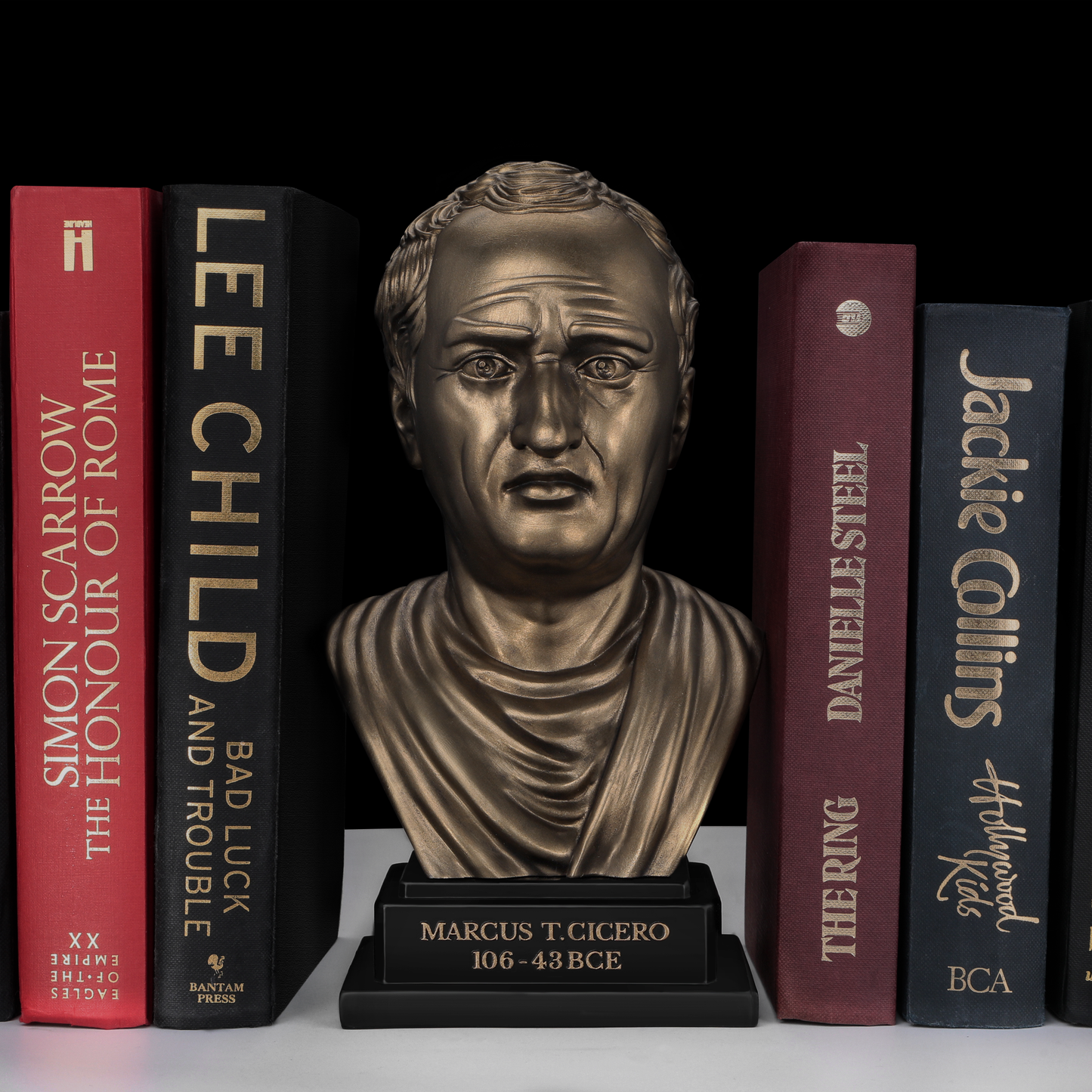
Cicero Biography: Orator, Philosopher, and Defender of the Roman Republic

Cicero: A Detailed Biography
Marcus Tullius Cicero (106–43 BCE), Rome’s greatest orator, statesman, and philosopher, rose from humble origins to become the voice of the dying Republic. His speeches, letters, and philosophical works shaped Latin literature and Western political thought for two millennia. This biography explores his rise, political career, exile, final fight against Antony, and brutal death, as documented by the Encyclopaedia Britannica and the Plutarch’s Life of Cicero.
Early Life and Rise
Birth and Education
Cicero was born on January 3, 106 BCE in Arpinum, a small town 70 miles southeast of Rome, to a wealthy equestrian family, as documented by the Livius.org. He studied law, rhetoric, and philosophy in Rome and Greece under the best teachers of the day.
First Major Success
In 80 BCE, at age 26, he defended Sextus Roscius against charges backed by Sulla’s regime — an audacious debut that made him famous overnight. By 70 BCE he prosecuted the corrupt governor Verres, effectively ending Verres’ career and cementing Cicero’s reputation as Rome’s finest courtroom speaker.
Political Career
Consulship and the Catilinarian Conspiracy
As a “new man” (novus homo) — the first in his family to reach the Senate — Cicero was elected consul in 63 BCE. That year he uncovered and crushed the Catilinarian conspiracy. His four thunderous Catilinarian Orations (“Quo usque tandem abutere, Catilina, patientia nostra?”) are still studied today, as preserved by the Perseus Digital Library.
Exile and Return
In 58 BCE, his political enemy Clodius Pulcher passed a law retroactively punishing anyone who had executed Roman citizens without trial (referring to the Catilinarians). Cicero went into exile for 16 months. He returned triumphantly in 57 BCE and resumed his career, though the First Triumvirate (Caesar, Pompey, Crassus) now dominated Rome.
Philosophical and Literary Works
Between 55–44 BCE, Cicero produced a flood of masterpieces: On the Republic, On the Laws, On Duties (De Officiis), Tusculan Disputations, and many others. He introduced Greek philosophy to Roman readers in beautiful Latin, as noted by the Loeb Classical Library.
Final Years and the Philippics
After Caesar’s assassination in 44 BCE, Cicero saw a chance to restore the Republic. His 14 blistering Philippic speeches against Mark Antony rallied the Senate but sealed his fate. When Octavian, Antony, and Lepidus formed the Second Triumvirate, Antony demanded Cicero’s name on the proscription list.
Death
On December 7, 43 BCE, soldiers caught Cicero fleeing by litter near his villa at Formiae. He stretched out his neck and was beheaded. His head and hands — punishment for the tongue and pen that had attacked Antony — were nailed to the Rostra in the Roman Forum, as recounted by the Smithsonian Magazine.
Death and Legacy
Cicero’s Enduring Impact
Cicero’s Latin became the model for Renaissance humanism and the Enlightenment. Petrarch rediscovered his letters in 1345, sparking the Renaissance. His ideas on natural law and republican government influenced Locke, Montesquieu, and the American Founding Fathers. The U.S. Senate still quotes him, and his stylistic clarity shaped modern prose.
Frequently Asked Questions About Cicero
Why Is Cicero Famous?
Rome’s greatest orator, defender of the Republic, and author of timeless philosophical works.
What Are Cicero’s Most Famous Works?
Catilinarian Orations, Philippics, On the Republic, On Duties, and his thousands of surviving letters.
Where Was Cicero Born?
Arpinum (modern Arpino), Italy, on January 3, 106 BCE.
Was Cicero a Stoic?
An Academic Skeptic, but he deeply admired and popularized Stoic ethics.
Why Did Mark Antony Kill Cicero?
Cicero’s Philippic speeches relentlessly attacked Antony; Antony demanded his proscription.
How Did Cicero Die?
Beheaded on December 7, 43 BCE; his head and hands were displayed on the Rostra in Rome.
What Does “Cicero” Mean?
“Chickpea” — a family nickname from an ancestor with a wart shaped like a chickpea.