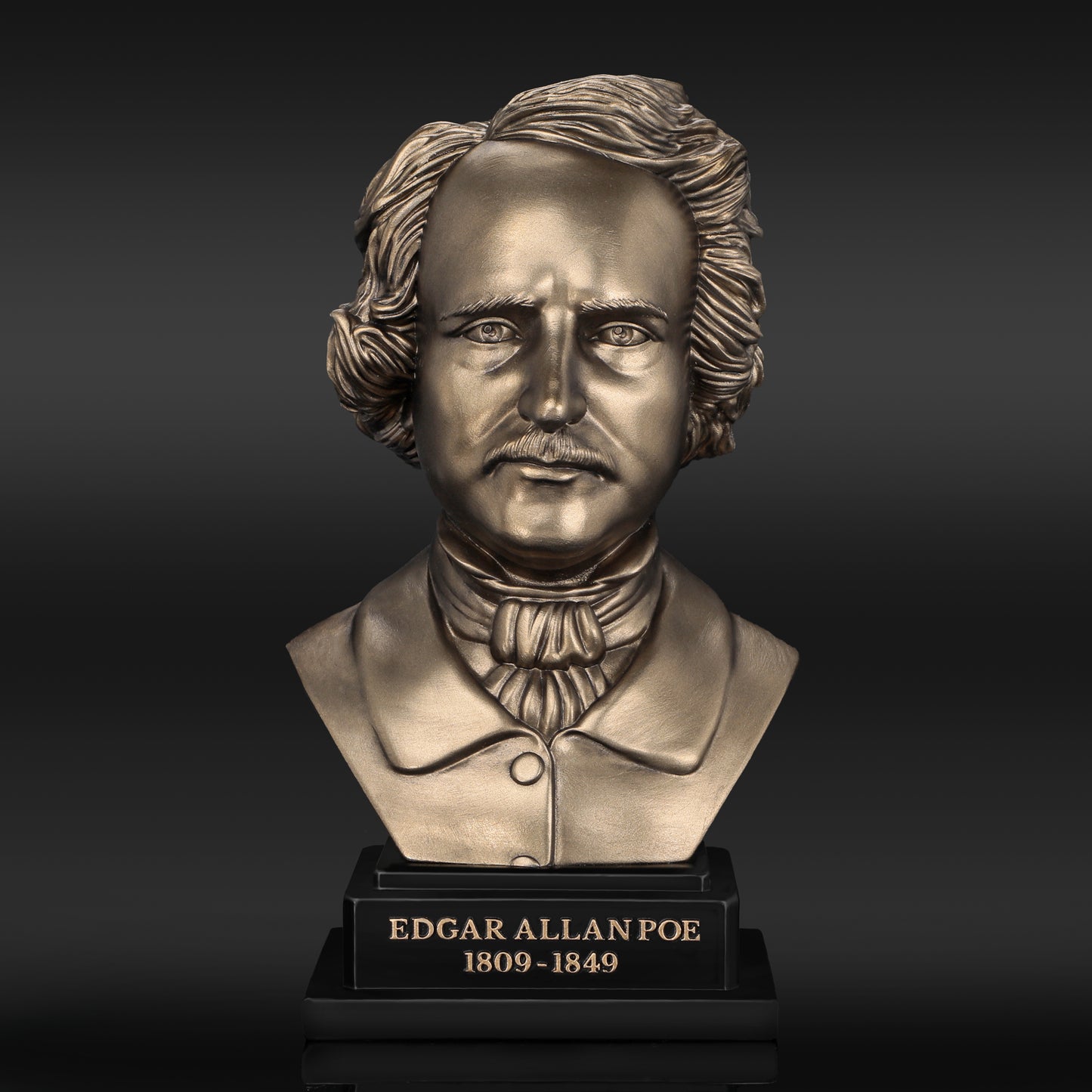
Edgar Allan Poe Biography: Life, The Raven, and Mysterious Death

Edgar Allan Poe: A Detailed Biography
Edgar Allan Poe, the master of the macabre, invented the detective story, perfected psychological horror, and wrote the immortal poem The Raven. His dark, lyrical works continue to captivate readers worldwide. This biography covers his tragic childhood, literary career, personal struggles, mysterious death, and enduring legacy.
Early Life and Tragedy
Orphaned Childhood
Edgar Allan Poe was born on January 19, 1809, in Boston, Massachusetts, to traveling actors David and Elizabeth Poe, as documented by the Edgar Allan Poe Museum. Both parents died before he was three; he was taken in (but never formally adopted) by wealthy Richmond merchant John Allan, giving him the middle name “Allan.”
Education and Rebellion
Poe attended the University of Virginia in 1826 but left after one year due to gambling debts. He enlisted in the U.S. Army under the name “Edgar A. Perry” and later attended West Point, from which he was court-martialed in 1831, as noted by the Edgar Allan Poe Society of Baltimore.
Literary Career and Masterworks
First Publications and The Raven
Poe published his first book Tamerlane and Other Poems (1827) at 18. Fame arrived with The Raven in 1845, instantly making him a household name. He pioneered the short story form and invented the detective genre with “The Murders in the Rue Morgue” (1841), featuring C. Auguste Dupin—the model for Sherlock Holmes, as highlighted by the British Library.
Major Tales of Terror
Classic horror stories include The Fall of the House of Usher, The Tell-Tale Heart, The Black Cat, The Pit and the Pendulum, and The Cask of Amontillado. His only novel, The Narrative of Arthur Gordon Pym (1838), influenced later writers like Jules Verne and H. P. Lovecraft.
Personal Life and Marriage
In 1836, Poe married his 13-year-old cousin Virginia Clemm in a ceremony where she was listed as 21. Their marriage was loving but tragic; Virginia died of tuberculosis in 1847 at age 24, plunging Poe into despair that permeates his final works, as documented by the U.S. National Park Service.
Mysterious Death
On October 3, 1849, Poe was found delirious on the streets of Baltimore, wearing someone else’s clothes, repeatedly calling for “Reynolds.” He died four days later on October 7, 1849, at age 40. Theories range from alcohol poisoning and rabies to murder and election-day “cooping”; the true cause remains unsolved, as explored by the Smithsonian Magazine.
Death and Legacy
Edgar Allan Poe’s Enduring Impact
Despite dying in poverty, Poe is now celebrated as the father of the modern detective story and a pioneer of science fiction and horror. His influence reaches Baudelaire (who translated him into French), Dostoevsky, Conan Doyle, Lovecraft, and countless film adaptations. The Edgar Award for mystery writing and the NFL’s Baltimore Ravens are named in his honor.
Frequently Asked Questions About Edgar Allan Poe
Why Is Edgar Allan Poe Famous?
Poe is famous for inventing the modern detective story, perfecting the Gothic tale, and writing the iconic poem The Raven.
What Are Poe’s Most Famous Works?
The Raven, The Fall of the House of Usher, The Tell-Tale Heart, The Murders in the Rue Morgue, The Black Cat, and The Cask of Amontillado.
Where Was Edgar Allan Poe Born?
Boston, Massachusetts, on January 19, 1809.
Did Poe Marry His Cousin?
Yes, he married his 13-year-old cousin Virginia Clemm in 1836 when he was 27.
How Did Edgar Allan Poe Die?
Poe died on October 7, 1849, in Baltimore under mysterious circumstances—possible causes include alcohol, rabies, or coercion; the exact cause is still unknown.
What Is The Raven About?
A grieving lover is visited by a talking raven that repeatedly utters “Nevermore,” driving him to madness.
Was Poe an Alcoholic?
Poe struggled with alcohol, but many scholars now believe depression, bipolar disorder, or medical sensitivity played a larger role.