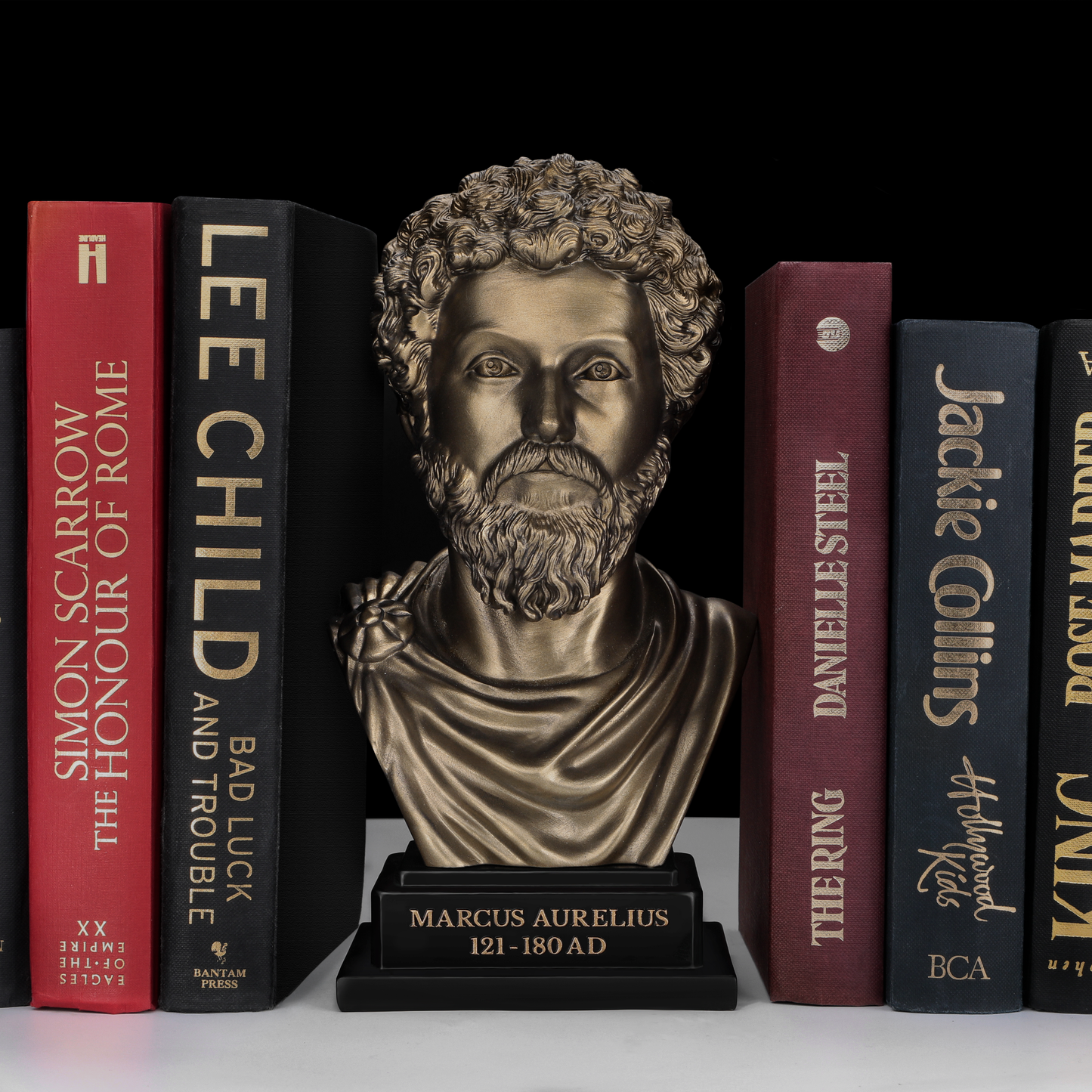
Marcus Aurelius Biography: Emperor, Stoic Philosopher, and Meditations

Marcus Aurelius: A Detailed Biography
Marcus Aurelius (121–180 CE), Rome’s philosopher-emperor, ruled at the height of the empire’s power while privately writing Meditations—one of the world’s most enduring works of Stoic wisdom. This biography covers his rise to power, Stoic philosophy, military campaigns, family tragedy, and lasting legacy.
Early Life and Education
Birth and Adoption
Marcus Aurelius was born on April 26, 121 CE, in Rome into a prominent Hispano-Roman family, as documented by the Encyclopaedia Britannica. In 138 CE, Emperor Hadrian, impressed by the boy’s seriousness, arranged for his adoption by the future emperor Antoninus Pius.
Stoic Training
From age 12, Marcus embraced Stoicism under tutors like Quintus Junius Rusticus and Apollonius. He wore the rough philosopher’s cloak, slept on the ground, and devoted himself to self-discipline, as recounted in Meditations and the Historia Augusta.
Rise to Power
Co-Emperor and Succession
In 161 CE, after Antoninus Pius’ death, Marcus became emperor alongside his adoptive brother Lucius Verus—the first time Rome had two emperors. When Verus died in 169 CE, Marcus ruled alone until 180 CE, as noted by the Metropolitan Museum of Art.
The Philosopher on the Throne
Meditations
Between 170–180 CE, while campaigning on the Danube frontier, Marcus wrote his private journal in Greek. Never meant for publication, Tà eis heautón (“To Himself”)—later titled Meditations—offers timeless Stoic advice on duty, mortality, and inner peace, as preserved in the Loeb Classical Library.
Military Campaigns and the Marcomannic Wars
Marcus spent 14 of his 19 years as emperor on the northern frontier fighting Germanic tribes and the Sarmatians. His Column in Rome (similar to Trajan’s) commemorates these brutal wars. The Antonine Plague (165–180 CE) also ravaged the empire during his reign, killing millions, as documented by the Cambridge World History of Human Disease.
Family and Succession
Marcus married Faustina the Younger in 145 CE; they had at least 13 children, but only Commodus and four daughters survived to adulthood. Breaking with the adoptive tradition of the Five Good Emperors, Marcus named his son Commodus as successor—a decision widely blamed for the empire’s later decline.
Death and Legacy
Marcus Aurelius’ Enduring Impact
Marcus died on March 17, 180 CE, probably in Vindobona (modern Vienna) or Sirmium, at age 58. His equestrian statue on the Capitoline Hill and his Column still stand in Rome. Meditations has influenced figures from Frederick the Great to Bill Clinton and remains the most widely read Stoic text today, as noted by the Daily Stoic.
Frequently Asked Questions About Marcus Aurelius
Why Is Marcus Aurelius Famous?
The last of the Five Good Emperors and author of Meditations, the most influential Stoic work ever written.
What Is Meditations?
A private philosophical journal written in Greek on the Danube frontier (170–180 CE), never intended for publication.
Where Was Marcus Aurelius Born?
Rome, on April 26, 121 CE.
Was Marcus Aurelius a Stoic?
Yes—he lived and wrote as a practicing Stoic, deeply influenced by Epictetus.
What Wars Did Marcus Aurelius Fight?
He fought the Marcomannic Wars against Germanic tribes on the Danube frontier for nearly 14 years.
Did Marcus Aurelius Persecute Christians?
Local persecutions occurred (e.g., Lyons 177 CE), but no systematic empire-wide persecution is attributed to him.
How Did Marcus Aurelius Die?
He died on March 17, 180 CE, likely of natural causes or the Antonine Plague, aged 58.