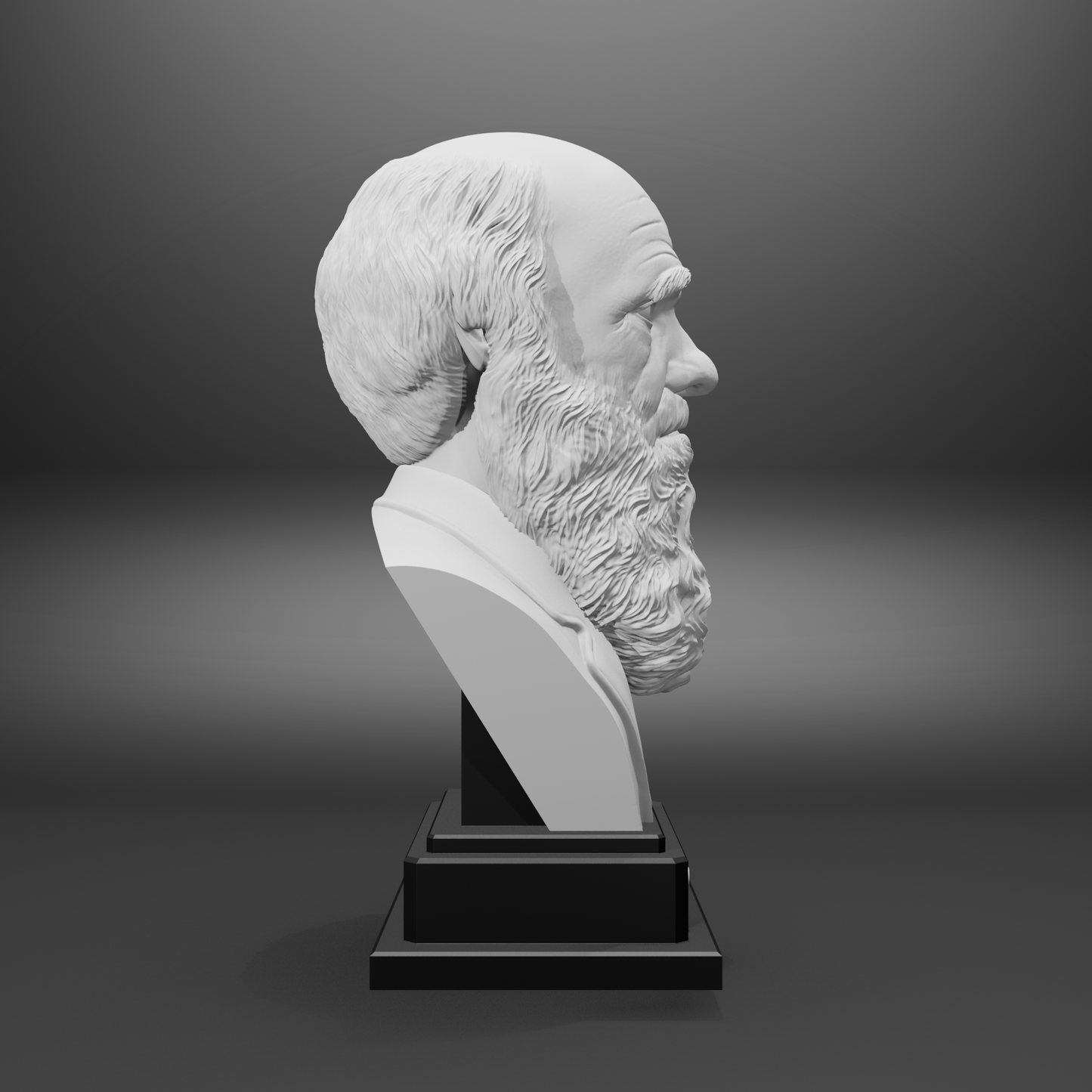
Charles Darwin Bust: Most Replicas Based on Echteler 1883 Bust or 1881 Barraud Photo
 Charles Darwin Bust: Why Most Commercial Replicas Are Based on the 1883–84 Joseph Echteler Bust or 1881 Barraud Portrait
The Charles Darwin bust is a popular collectible for science enthusiasts, evolution fans, and history buffs. With his signature full white beard, thoughtful expression, receding hairline, and dignified pose, these replicas capture the iconic image of the father of evolutionary theory in his later years. When browsing online marketplaces like Etsy, Amazon, or specialty sculpture sites, the majority of commercial Darwin busts (especially affordable 3D-printed or resin versions) draw from one of two primary sources: the 1883–84 plaster bust by Joseph Echteler (held at The Metropolitan Museum of Art) or the 1881 photograph by Herbert Rose Barraud (often cited as Darwin's last portrait before his death in 1882).
These references dominate because they represent Darwin at his most recognizable mature age—wise, bearded, and contemplative—while being accessible (public domain or easily referenced) for sculptors and manufacturers. Here's why these two visuals have become the go-to for most available busts today.
1. The Joseph Echteler Bust (1883–84) at The Metropolitan Museum of Art
Created by German sculptor Joseph Echteler (Munich, 1853–1908) shortly after Darwin's death, this painted plaster bust (imitating terracotta) stands at 29 inches (73.7 cm) tall with a black-painted pedestal. Gifted by the artist himself to the Met in 1887 (Object Number 87.31), it's a posthumous yet highly regarded lifelike portrait. Echteler was known for realistic busts often made from photographs alone, capturing Darwin's prominent beard, high forehead, and intellectual demeanor.

Why this bust influences so many commercial replicas:
- Realistic and dignified reference: It shows Darwin in his final phase—aged, bearded, and sage-like—aligning perfectly with his enduring public image as the author of On the Origin of Species.
- Public domain and museum prestige: As a 19th-century work in the Met's collection (Open Access policy), high-res images are freely available for study and reproduction without licensing fees, encouraging 3D modelers and replica makers to base their designs on it.
- Proportions and detail suitable for scaling: The bust format (head and shoulders) translates easily to smaller commercial sizes (5–16 inches), preserving the beard texture, facial structure, and expression that fans recognize instantly.
Many budget and mid-range replicas (especially those with antique bronze or plaster-like finishes) echo this bust's style, often adding simple bases or inscriptions for a "museum replica" feel.
2. The 1881 Herbert Rose Barraud Photograph (Darwin's Last Portrait)
Taken in summer 1881 by London photographer Herbert Rose Barraud (1845–1896), this black-and-white portrait shows 72-year-old Darwin in formal attire, seated or standing with a weary yet resolute expression. Darwin reportedly disliked prolonged sittings due to illness, making this one of his final images before death in April 1882. Held by institutions like the Huntington Library and widely public domain (pre-1928 U.S. copyright expiration), it's featured prominently in Wikipedia, biographies, and Darwin correspondence archives.

Key reasons this photo drives many bust replicas:
- Definitive late-life likeness: It captures Darwin's iconic full beard, receding hair, deep-set eyes, and contemplative gaze—elements that define the "classic Darwin" in popular culture.
- Public domain accessibility: Free high-res versions on Wikimedia Commons allow artists worldwide to model busts directly from it without restrictions, unlike copyrighted modern photos.
- Emotional and historical resonance: As potentially his last photograph (per scholar Gene Kritsky), it evokes Darwin's legacy at the peak of his fame, making replicas feel authentic and symbolic.
Commercial busts often combine elements from both sources: the Echteler bust's 3D structure with the Barraud photo's facial details, resulting in consistent bearded, elderly portrayals across Etsy 3D prints, resin casts, and premium sculptures.
Why These Two Sources Dominate Over Other Portraits
Darwin sat for dozens of portraits (paintings by John Collier, sculptures by Boehm or Couper, earlier photos), but earlier ones show a younger, less bearded Darwin. Commercial replicas prioritize the mature, iconic look:
- Recognition factor: Fans expect the bearded sage from textbooks and museums—not the clean-shaven young naturalist from the Beagle voyage.
- Practicality for production: Public domain status of both the Echteler bust (Met Open Access) and Barraud photo (Wikimedia) lowers barriers for mass-market replicas.
- Cultural consistency: These images appear most frequently in books, documentaries, and memorials, reinforcing them as the "standard" Darwin visual.
While some artistic takes add evolution motifs (e.g., finches, books) or use other references (like Boehm's seated statue), the core facial likeness in most affordable busts traces back to Echteler's 1883–84 plaster or Barraud's 1881 photo.
Charles Darwin Bust Replicas
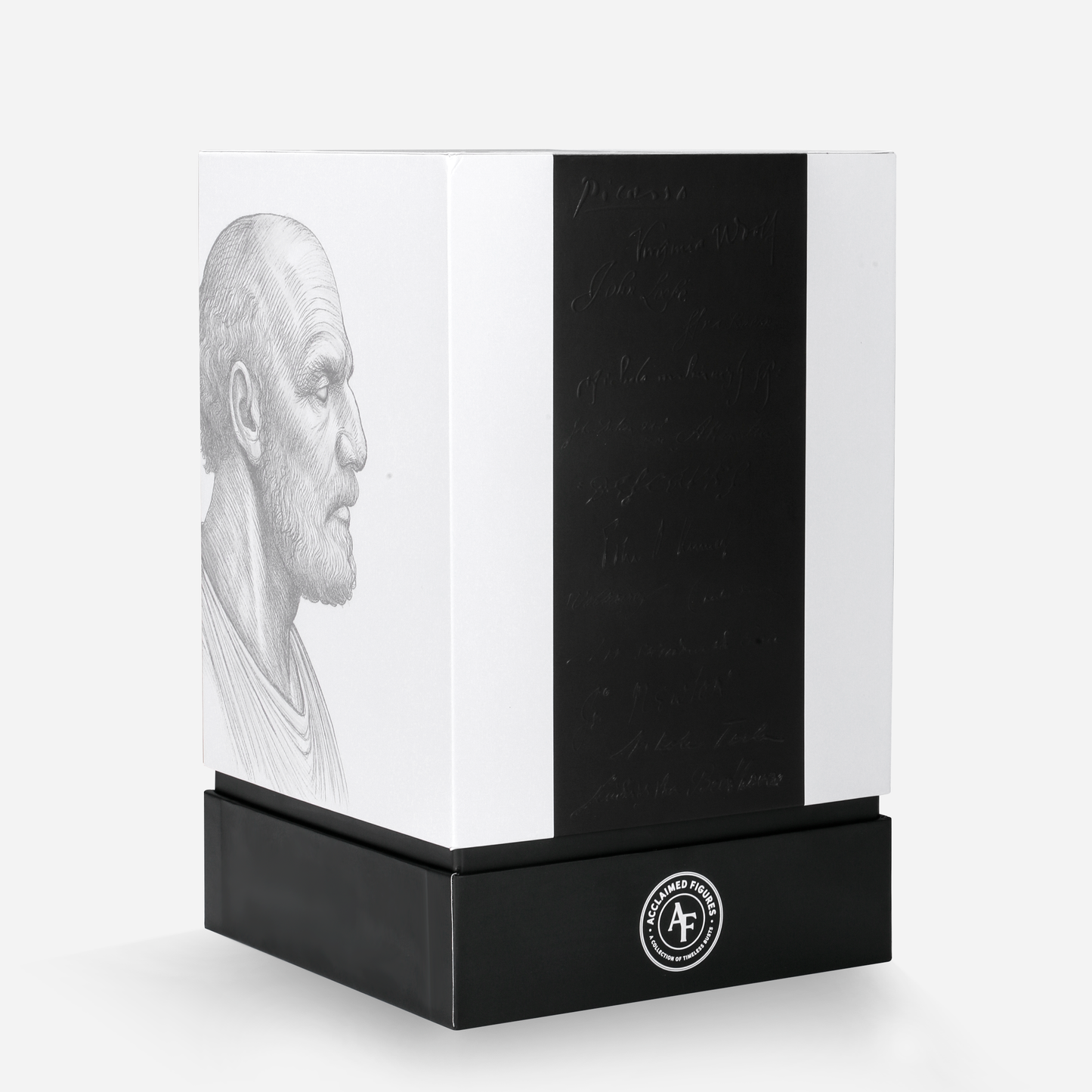
From tiny 4-inch 3D prints to large 26-inch plaster casts, replicas based on these sources make excellent additions to bookshelves, offices, or science classrooms. Look for ones with detailed beards, thoughtful expressions, and optional engraved bases ("Charles Darwin 1809–1882"). Choose licensed or high-quality makers to ensure durability and respect for the originals.
→ View the Charles Darwin Bust Replica
References
- The Metropolitan Museum of Art – Charles Darwin Bust by Joseph Echteler (1883–84)
- Wikimedia Commons – Charles Darwin by Herbert Rose Barraud (1881)
- Wikipedia – Portraits of Charles Darwin
- Darwin Correspondence Project – Barraud Photos