Marcus Aurelius Bust: The History Behind the Most Iconic Roman Portrait

Marcus Aurelius Bust: The History Behind the Most Iconic Roman Portrait
The bust of Marcus Aurelius is instantly recognisable: short curly hair, full beard, calm eyes, and an expression of quiet authority. For two millennia it has been the visual symbol of Stoic wisdom and Roman power.
The Original Roman Portrait (161–180 CE)
Marcus Aurelius ruled as Roman emperor from 161 to 180 CE – the last of the Five Good Emperors and author of Meditations. Unlike earlier veristic Republican portraits that exaggerated age and flaws, Marcus is shown in idealised maturity: strong, serene, and timeless.[1]
The most famous surviving example is the monumental gilded bronze equestrian statue on the Capitoline Hill in Rome (the only ancient bronze equestrian statue still intact). The head from that statue is the archetype every modern Marcus Aurelius bust follows.[2]
Key Features of the Authentic Marcus Aurelius Portrait
- Short, tightly curled hair and full beard (introduced the “philosopher beard” fashion)
- Deep-set eyes looking slightly upward – the classic Stoic gaze
- No crown or laurel wreath – he wanted to be seen as philosopher, not god
- Shoulders slightly turned – creates subtle movement rare in Roman busts
Famous Museum Examples
- Capitoline Museums, Rome – the original equestrian head (161–180 CE)
- Metropolitan Museum of Art, New York – marble portrait (our replica is based on this version)
- Louvre, Paris – marble bust showing the upward gaze
- British Museum – bronze portrait head
Why the Marcus Aurelius Bust Became the Symbol of Stoicism
After the 1558 publication of Meditations, artists and scholars needed a face for the philosophy. The calm, thoughtful expression of the surviving portraits made it the perfect visual shorthand. By the 19th century, every serious library had a Marcus Aurelius bust beside the works of Seneca and Epictetus.
Marcus Aurelius Bust Replicas
Original Roman marble or bronze examples sell for millions at auction. Accurate replicas in the correct 26 cm size are now available in premium unsaturated resin.
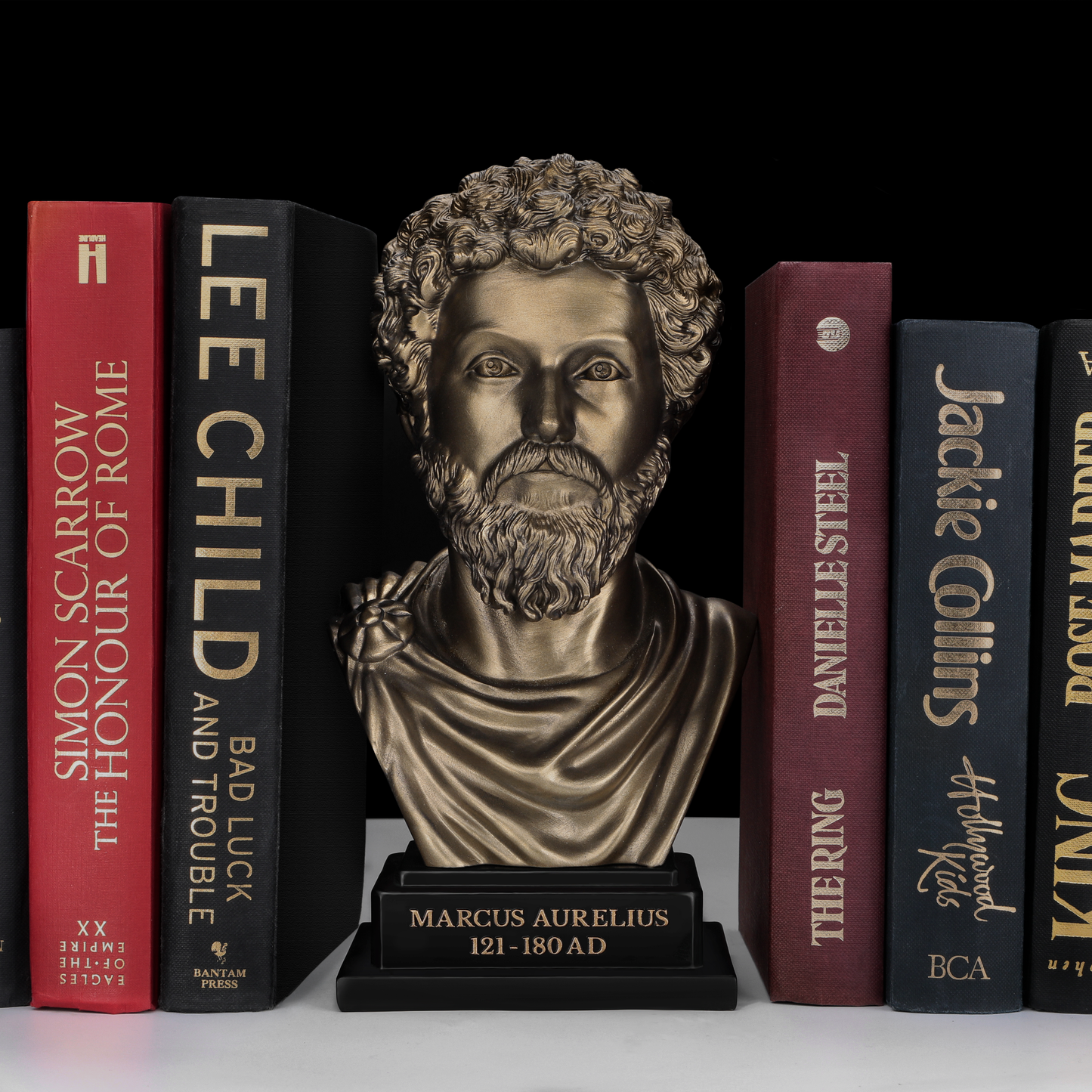
At Acclaimed Figures we cast directly from the Metropolitan Museum portrait, reproducing every curl and expression line. Available in Antique Bronze or Stone White, mounted on an engraved charcoal base with “Marcus Aurelius 121–180 CE”.
→ View the Marcus Aurelius Bust Replica